
What if your daily protein shake was a genuine investment in your long-term vitality rather than a gritty, chalky compromise you’ve learned to tolerate? You’ve likely felt the frustration of scanning complex ingredient lists only to find hidden fillers that leave you feeling bloated instead of energized. Finding the best plant-based protein products Australia offers shouldn’t feel like a second job, yet the anxiety of missing a complete amino acid profile remains a common hurdle for many. It’s about more than just a quick fix; it’s about building your “wellth” through conscious, informed choices that support your body’s unique needs.
This guide will help you decode labels with confidence and integrate premium Australian proteins into your lifestyle for sustainable, holistic well-being. We’ll explore the latest 2026 market trends, explain FSANZ protein claim regulations, and review high-quality options like Bulk Nutrients Earth Protein, currently priced at $42.00 AUD. By the end, you’ll have the clarity to choose a brand you can finally trust to fuel your day without the digestive discomfort.
Key Takeaways
- Redefine your daily nutrition as a strategic investment in your long-term vitality and holistic health.
- Understand the science of bio-availability to ensure you’re getting a complete amino acid profile from every scoop.
- Evaluate the best plant-based protein products australia offers by comparing the unique functional benefits of faba bean, pea, and hemp.
- Master a simple two-step process for reading nourishment panels to align your choices with your specific muscle or weight goals.
- Learn how to seamlessly integrate plant proteins into savory recipes for a more diverse and enjoyable culinary experience.
Investing in Your Wellth: Why Plant-Based Protein is the Modern Australian Standard
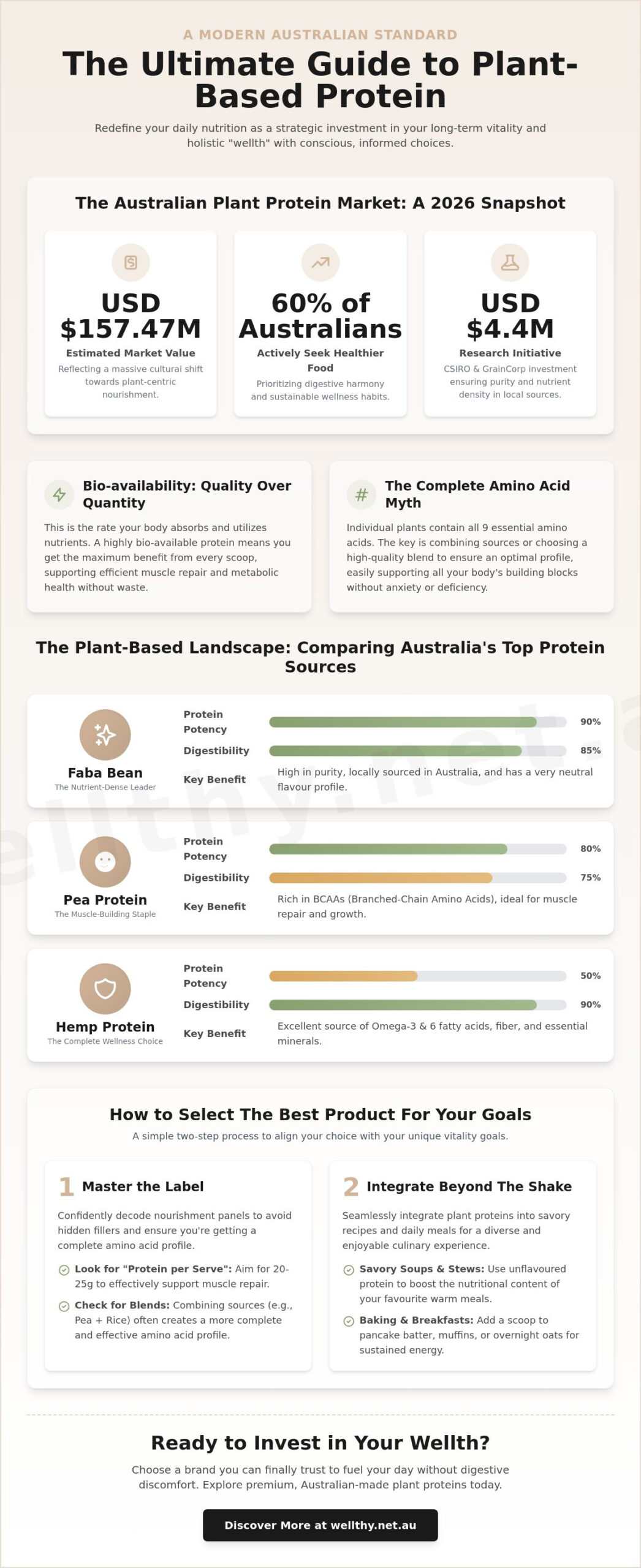
Think of your body as your most valuable asset. Just as you’d carefully manage a financial portfolio, choosing the best plant-based protein products australia offers is an intentional deposit into your “wellth.” This isn’t just about hitting a macronutrient target or following a passing fitness trend. It’s a strategic choice for long-term vitality. In 2026, the Australian plant protein market has reached an estimated value of USD $157.47 million, reflecting a massive cultural shift. We’re moving away from seeing protein as a niche “vegan” requirement and recognizing it as a fundamental pillar of human resilience. Whether you’re a high-performance athlete or someone navigating a busy professional life, plant-centric nourishment provides the clean, sustainable energy required to thrive in a demanding world.
The modern Australian standard is no longer defined by how much meat you can consume, but by how effectively you can nourish your cells without compromising your digestive comfort. High-quality plant proteins support mental clarity and physical endurance without the “heavy” feeling often associated with traditional animal-based diets. By diversifying your protein sources, you’re not just eating; you’re investing in a lifestyle that values longevity, environmental harmony, and peak personal performance.
The Rise of Functional Plant Nutrition in Australia
We’ve moved beyond temporary fitness fixes. Today, Australians are embracing sustainable wellness habits that prioritize how they feel hours after a meal, not just the immediate sensation of fullness. Approximately 60% of Australians are now actively seeking healthier food options, which has sparked a revolution in product quality. Transitioning to functional plant nutrition supports digestive harmony and can even lead to noticeable improvements in skin health.
Because Australia maintains rigorous food standards, our locally sourced ingredients like faba beans and lupin are often regarded as global leaders in purity and nutrient density. Choosing the best plant-based protein products australia has available means you’re likely consuming ingredients grown in some of the cleanest soil in the world. This focus on domestic production, supported by a USD $4.4 million research initiative launched by CSIRO and GrainCorp in 2025, ensures that your protein is as fresh as it is effective.
Protein as a Pillar of Holistic Wellness
True vitality requires a seamless alignment between your physical nourishment and your mental well-being. When you prioritize protein quality, you provide your body with the essential building blocks needed for neurotransmitter function and muscle repair. This holistic approach reduces the anxiety of “not getting enough” and replaces it with the quiet confidence that your body is fully supported.
Integration is key to a balanced lifestyle. It’s about finding harmony between your supplement routine and your whole-food intake. Whether you’re whipping up a quick post-workout smoothie or investing in your wellth through nourishing dining at a local cafe, every choice matters. Plant proteins offer a restorative cadence to your nutrition, helping you maintain steady energy levels throughout the day rather than experiencing the spikes and crashes of highly processed alternatives. It’s a gentle yet powerful way to ensure you’re always operating at your best.
Understanding the Science: Bio-availability and the Complete Amino Acid Profile
Understanding the science behind your nutrition is the first step toward true health ownership. When you evaluate the best plant-based protein products australia has on the market, you’re looking for more than just a high number on the back of the pack. You’re looking for bio-availability. Bio-availability is the rate and extent to which the body absorbs nutrients. If your body can’t effectively utilize the protein you consume, the investment in your wellth is lost. Quality is measured by how well these nutrients integrate into your system to support muscle repair and metabolic health.
A common misconception that often causes anxiety is the idea that plant proteins are “incomplete.” This is a myth. While individual plants might have lower levels of specific amino acids, they still contain the full spectrum of all nine essential amino acids your body requires. As Harvard experts on plant-based diets suggest, a varied intake throughout the day ensures you receive everything needed for optimal function. It’s about the total daily intake rather than a single meal, allowing you to move away from rigid food rules toward a more mindful, flexible approach.
In Australia, we’re fortunate to have strict oversight. The Food Standards Australia New Zealand (FSANZ) Code, which was last updated on March 1, 2026, provides clear guardrails for consumers. For a product to claim it’s a “source of protein,” it must contain at least 5g per serving. To be a “good source,” that number jumps to 10g. These regulations prevent misleading marketing and help you identify which products actually deliver on their promises. Superlative claims like “very high protein” are strictly prohibited, ensuring that the labels you read are grounded in reality rather than hype. Knowing these numbers empowers you to choose with confidence.
The Importance of Leucine and BCAAs in Plant Formulas
Muscle recovery and daily vitality depend heavily on Branched-Chain Amino Acids (BCAAs), particularly leucine. Modern Australian brands now optimize their plant blends to match the profile of traditional whey by combining different sources. For example, the synergy between pea and rice protein creates a balanced amino acid spectrum that is easily utilized by the body. This thoughtful alignment ensures you don’t have to sacrifice performance when choosing a sustainable, plant-centric path.
Digestive Enzymes and Gut Harmony
Feeling energized rather than bloated is a hallmark of a high-quality protein. Some products cause discomfort because they rely on artificial gums and thickeners to improve texture. Choosing fermented plant proteins or those with added digestive enzymes can significantly improve nutrient uptake while maintaining gut harmony. Always look for “clean labels” that prioritize simple, recognizable ingredients. If you’re interested in discovering brands that align with these high benchmarks, you can explore our latest brand partnership features for curated wellness inspiration.
The Plant-Based Landscape: Comparing Pea, Hemp, Rice, and Faba Bean Sources
Choosing the right source is about alignment with your body’s unique needs. While soy protein held a dominant 38.92% market share in 2025, the best plant-based protein products australia provides are increasingly diversifying. Pea protein is currently the fastest-growing segment, boasting a 5.97% compound annual growth rate according to Mordor Intelligence data from January 2026. This popularity stems from its exceptional protein density and reliable mixability, making it a staple for those who prioritize a smooth texture. For those seeking more than just muscle support, hemp protein serves as an Australian-grown champion. It offers a rich supply of Omega-3 fatty acids and dietary fiber, supporting both heart health and digestive regularity.
If you have a sensitive system, rice protein remains a trusted hypoallergenic choice. It provides a gentle alternative that avoids common allergens while still delivering a robust amino acid profile. We’re also seeing the rise of the faba bean as an emerging star in the local market. Brands like VPA now offer Faba Bean Protein for $49.00 AUD, prized for its remarkably neutral taste and high solubility. This diversification allows you to tailor your intake based on the Australian government protein guidelines, ensuring your daily requirements are met through a variety of nutrient-dense plants rather than relying on a single source.
Texture and Flavour Profiles: What to Expect
Texture is often the deciding factor in maintaining a consistent wellness routine. Pea and faba bean proteins are generally the smoothest options, making them ideal for cold shakes where “grittiness” can be a dealbreaker. In contrast, the slightly more fibrous nature of hemp or rice protein works beautifully in baking, adding structure to protein-enriched snacks. When it comes to sweetness, modern Australian brands are moving away from artificial chemicals. You’ll find sophisticated blends using Stevia, Monk Fruit, or Thaumatin, a natural protein-based sweetener that provides a clean finish without the lingering aftertaste often found in lower-quality alternatives.
Sourcing and Sustainability in Australia
Investing in your wellth also means considering the footprint of your nourishment. Choosing Australian-grown hemp or faba beans supports domestic farmers and reduces the carbon emissions associated with long-distance international shipping. This commitment to local sourcing is a core part of a mindful lifestyle. It’s about recognizing that your health is inextricably linked to the health of the environment. You can extend this plant-centric approach beyond your protein shake by exploring nourishing dips and plant-based snacks that utilize these same sustainable legumes. By choosing plants over traditional livestock, you significantly reduce water usage and land degradation, making your vitality a win for both you and the planet.
How to Select the Best Product for Your Unique Vitality Goals
Selecting the right support for your body is a deeply personal decision that goes beyond following a generic list. To find the best plant-based protein products australia offers in 2026, you need a framework that prioritizes your specific health objectives. This isn’t just about picking a flavor you like; it’s about ensuring the ingredients align with your metabolic needs and digestive capacity. With 60% of Australians now actively seeking healthier food options, the market is crowded with choices. Using a structured approach helps reduce the overwhelm and ensures your investment yields the highest return for your wellth.
- Step 1: Identify your primary goal. Are you focused on muscle recovery after a workout at the local gym, weight management, or simply maintaining steady energy levels throughout a busy day?
- Step 2: Scrutinize the ‘Nourishment Panel’. Look past the front-of-pack claims and check the protein-per-gram ratio to ensure you’re getting value for your money.
- Step 3: Check for third-party testing. If you’re a competitive athlete, look for certifications like HASTA to ensure the product is free from banned substances.
- Step 4: Prioritize ‘Clean Label’ ingredients. Avoid products that rely on inflammatory fillers or artificial sweeteners that disrupt gut harmony.
- Step 5: Consider the ‘Human Element’. Choose brands whose ethical standards and sourcing practices resonate with your personal values.
Reading Between the Marketing Lines
Marketing can often obscure the reality of what’s inside the tub. Many products use ‘filler’ ingredients like maltodextrin or excessive natural flavors to mask a poor-quality base. It’s also vital to understand that in the Australian context, the term ‘Natural’ isn’t as strictly regulated as ‘Certified Organic’ by FSANZ. To calculate the true protein percentage of a product, divide the protein grams per serving by the total serving size in grams and multiply by 100. This simple calculation reveals if a product is a high-quality isolate or mostly filler.
Matching Protein to Your Lifestyle
Your lifestyle dictates your nutritional requirements. A busy professional might benefit from a smooth faba bean blend that mixes easily in a morning shaker, while an endurance runner might need a blend of pea and rice protein for a more sustained release of amino acids. Post-workout recovery is most effective when you pair your protein with a small amount of complex carbohydrates to replenish glycogen stores. You can even move beyond the shaker by trying inspiring recipes that go beyond the basic shake, such as adding unflavoured hemp protein to a nutrient-dense salad. If you’re a brand looking to connect with health-conscious Australians, feel free to discover our latest brand partnership packages to see how we can showcase your commitment to quality.
Integrating Protein into a Holistic Lifestyle: Beyond the Standard Shake
True vitality isn’t found at the bottom of a shaker bottle. It’s woven into the fabric of your daily meals. While the best plant-based protein products australia offers are incredibly convenient, their true power is unlocked when you move beyond the “scoop and shake” mentality. Treating protein as a versatile culinary ingredient rather than a clinical supplement transforms your nourishment into an act of self-care. This shift allows you to enjoy the benefits of high-quality amino acids throughout the day, ensuring your energy levels remain stable and your palate remains satisfied. By integrating these products into whole-food dishes, you create a synergistic effect that supports both physical resilience and mental clarity.
This holistic approach reduces the “supplement fatigue” many people experience. Instead of a chore, your protein intake becomes a seamless part of your lifestyle. It’s about finding harmony between modern convenience and traditional, whole-food nourishment. When you align your protein choices with your daily rituals, you’re no longer just “getting it over with.” You’re making a conscious investment in your long-term wellth.
Culinary Creativity with Plant Protein
Integrating unflavoured pea or faba bean protein into savoury dishes is a game-changer for those who want to avoid the “chalky” textures often associated with sweet shakes. You can easily whisk a scoop into winter soups, lentil stews, or even homemade sourdough to boost nutrient density without altering the flavour profile. For breakfast, elevating your morning oats or pancakes with a serving of hemp protein adds a nutty depth and essential Omega-3s. To maintain protein stability, add the powder toward the end of the cooking process for liquid dishes. When baking, mix it thoroughly with dry ingredients to ensure an even distribution of nourishment throughout your bread or muffins.
The Wellthy Way: A 24-Hour Vitality Sample
A structured routine ensures your body receives a steady stream of building blocks. Start your morning with a protein-enriched smoothie bowl, turning your breakfast into a mindful ritual of assembly and appreciation. By midday, focus on whole-food synergy by pairing a plant-based snack with healthy fats. As you increase your protein intake, remember that hydration and fibre are your closest allies. With 67% of Australian adults classified as overweight or obese in 2026, focusing on satiety through protein and fibre is a practical, evidence-based step toward better health outcomes.
- 7:00 AM: Morning smoothie bowl with faba bean protein, topped with local berries and seeds for a mindful start.
- 1:00 PM: A hearty vegetable soup fortified with unflavoured pea protein for sustained afternoon focus.
- 4:00 PM: A small handful of nuts or a protein-enriched snack to maintain metabolic momentum.
- 7:00 PM: A balanced dinner featuring whole grains and legumes, ensuring you meet your total daily requirements.
Your journey toward holistic health is a marathon, not a sprint. Every conscious choice you make today is a deposit into your future vitality. Start your investment now by exploring the diverse range of Australian-grown proteins and finding the ones that resonate with your unique rhythm. You deserve to feel vibrant, energized, and fully supported by the food you eat. For those in Brisbane looking to source the freshest local ingredients to complement their plant protein routine, the West End Markets Brisbane offer an exceptional farm-to-table experience that aligns perfectly with a conscious wellness lifestyle.
Cultivating Your Future Vitality
Choosing the right nourishment is a powerful act of self-leadership. You’ve learned that identifying the best plant-based protein products australia offers requires looking past marketing hype to understand bio-availability and FSANZ standards. By moving beyond the standard shake and embracing culinary integration, you transform a daily requirement into a sustainable lifestyle. This approach ensures your body receives the full amino acid spectrum it needs to thrive while maintaining gut harmony and mental clarity. It’s about creating a routine that feels restorative rather than restrictive.
As an expert-led Australian lifestyle publication, Wellthy is dedicated to helping you navigate these transitions with quiet confidence. Our focus on holistic and sustainable well-being is why we’re trusted by health-conscious professionals nationwide. Your health is the most valuable currency you possess, and every conscious choice is a deposit into your future. Invest in your wellth with our curated wellness guides and continue your journey toward a more vibrant, balanced life. You have the tools and the knowledge; now it’s time to let your vitality shine.
Common Questions About Plant-Based Vitality
Is plant-based protein as effective as whey for building muscle?
Yes, plant-based options are equally effective for muscle synthesis when you ensure adequate leucine intake. Leucine is the key amino acid for triggering muscle growth; aiming for 2 to 3 grams per serving is ideal for most active adults. Many modern Australian blends now match the leucine content of whey, providing a sustainable path to physical resilience without the digestive heaviness often associated with dairy products.
What is the best-tasting plant-based protein in Australia?
Flavor is personal, but faba bean and pea protein isolates are currently the highest-rated for their neutral profile and smooth mixability. Products like VPA Faba Bean Protein ($49.00 AUD) or Musashi Plant Protein Vanilla ($99.99 AUD for 2kg) have set new benchmarks for palatability in 2026. These options avoid the bitter aftertaste often found in older soy-based formulas, making them a pleasure to integrate into your daily nourishment routine.
Can I use plant-based protein powder if I am pregnant or breastfeeding?
Most high-quality plant proteins are safe, yet you should prioritize clean label products free from artificial sweeteners and heavy metals. Pregnancy requires increased nourishment, so opting for organic hemp or pea protein can be a gentle way to meet your elevated protein goals. Always discuss new supplements with your healthcare provider to ensure they align with your specific health circumstances during this important life stage.
How do I avoid the chalky texture common in vegan proteins?
Switching to faba bean protein or high-mesh pea isolates is the most effective way to eliminate grittiness. Using a high-speed blender instead of a hand shaker also significantly improves the mouthfeel of your drink. For the smoothest results, try adding a source of healthy fat, such as a teaspoon of almond butter, which helps emulsify the powder and creates a more luxurious, creamy texture.
What should I look for on the label to ensure a product is truly ‘clean’?
Prioritize products with fewer than five recognizable ingredients and avoid those containing maltodextrin or thickeners like xanthan gum. Under FSANZ regulations updated in March 2026, labels must be transparent about protein content, so check that your choice provides at least 10g per serving to qualify as a good source. Avoiding artificial natural flavors ensures you aren’t consuming hidden chemical additives that could potentially trigger an inflammatory response.
Is it better to have a single-source protein or a blend?
Blends are generally superior because they combine different amino acid profiles to maximize bio-availability. A mix of pea and rice protein, for example, ensures you receive all nine essential amino acids in the right proportions for optimal repair. When searching for the best plant-based protein products australia provides, look for these synergistic combinations to ensure your body can fully utilize the nourishment you’re investing in.
Can plant protein help with weight management and satiety?
Yes, plant proteins are highly effective for weight management because they often contain natural fibers that promote a feeling of fullness. With 67% of Australian adults classified as overweight in 2026, choosing satiating, nutrient-dense options is a practical step toward long-term health. For those seeking professional medical guidance to support their wellness journey, aussiescripts.com.au offers a convenient Australian telehealth platform to help manage your health goals. The slower digestion rate of plant fibers helps stabilize blood sugar levels, which reduces the likelihood of energy crashes and mid-afternoon cravings.
Are Australian plant protein brands better than international ones?
Australian brands often lead in purity and sustainability due to our strict domestic manufacturing standards and shorter supply chains. The 2025 research initiative by CSIRO and GrainCorp has significantly boosted our local processing capabilities, reducing reliance on imported ingredients. Choosing local products not only supports our farmers but also ensures you’re consuming the freshest possible protein with a significantly lower environmental footprint. If you’re passionate about sourcing the freshest local ingredients directly from producers, exploring the west end markets Brisbane community is a wonderful way to connect with the growers behind your food.