
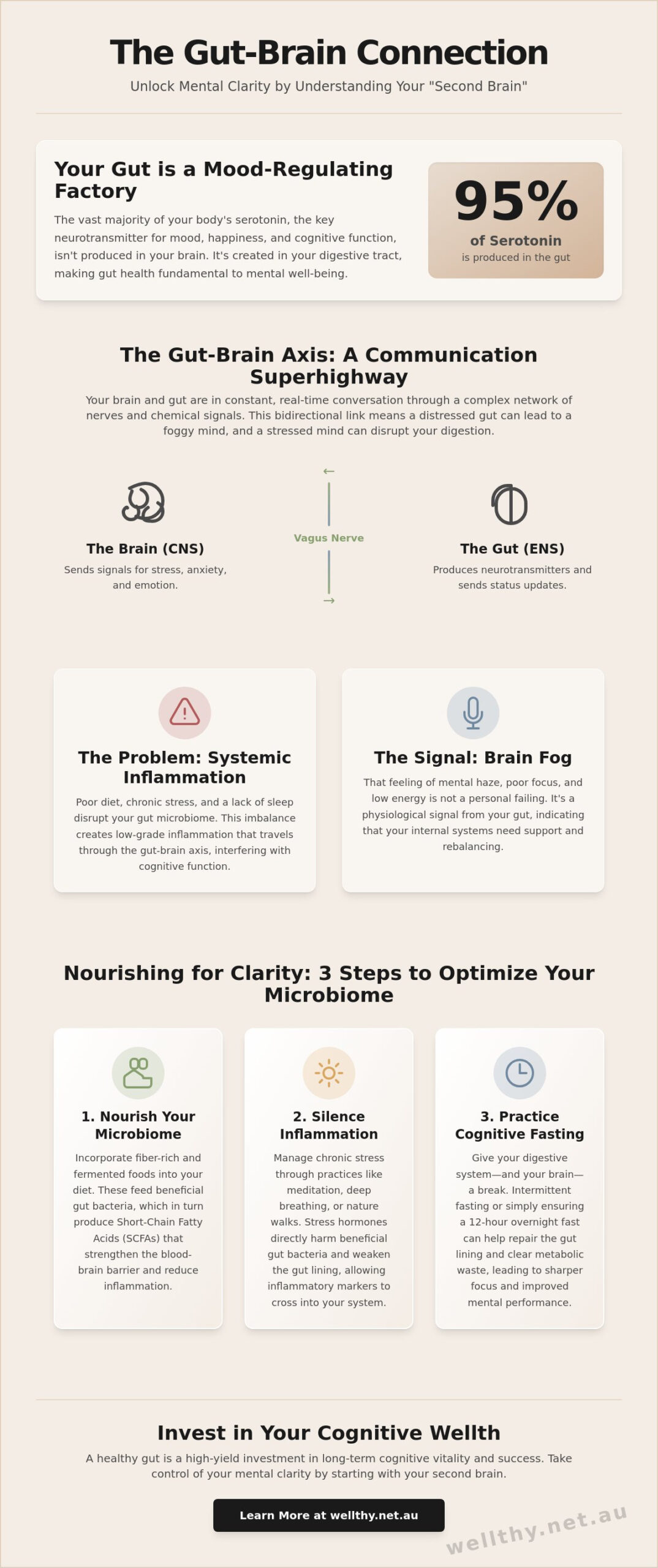
Did you know that approximately 95% of your body’s serotonin, the neurotransmitter responsible for mood and cognitive function, is produced in your digestive tract? This biological reality means that the connection between gut health and mental clarity is far more profound than most of us realise. You’ve likely experienced those days where, despite a full night of rest, your mind feels heavy and your focus remains just out of reach. It’s a common struggle that often leads to performance anxiety, yet the solution rarely lies in another cup of coffee or a more rigid schedule.
We believe that true wellth starts with understanding how your internal systems work in harmony. You deserve to feel sharp, capable, and vibrant throughout your entire day. This article will show you exactly how the powerful connection between your microbiome and your mind can eliminate brain fog and unlock a new level of cognitive vitality. We’ll explore the evidence-based science behind your second brain and provide three actionable, sustainable steps to improve your daily mental performance starting today.
Key Takeaways
- Understand the bidirectional communication superhighway of the gut-brain axis to clear metabolic waste and silence neuroinflammation.
- Discover how your microbiome produces essential neurotransmitters that directly facilitate gut health and mental clarity.
- Identify why your brain fog might be a digestive signal rather than a lack of caffeine, allowing you to treat the source instead of the symptom.
- Master “The Big Three” of microbiome nourishment and the benefits of cognitive fasting to repair and protect your mental performance.
- Learn to view your microbiome as a high-yield investment in your “wellth,” creating a sustainable foundation for long-term cognitive vitality and success.
Understanding the Link Between Gut Health and Mental Clarity
You know that heavy, clouded feeling where focus seems just out of reach. We often dismiss brain fog as a simple result of a late night or a stressful week. However, your biology tells a more complex story. True mental clarity is the physiological state where your brain is free from neuroinflammation and the accumulation of metabolic waste. It’s the result of a finely tuned system working in harmony, rather than a reflection of your productivity or willpower.
Your gut acts as the control room for this cognitive function, orchestrating how you think, feel, and process information every single day. This connection is a physical reality known as the gut-brain axis. This bidirectional communication superhighway allows your digestive system and your brain to exchange signals in real-time. When you experience a lack of gut health and mental clarity, it’s often because this communication line is cluttered with inflammatory markers. Your microbiome, the trillions of bacteria residing within you, serves as the primary operator of this system, influencing everything from neurotransmitter production to your immune response.
If you’ve felt stuck in a cognitive haze, understand that this is a physiological signal from your body, not a personal failing. It’s an invitation to look inward and support the foundational systems that fuel your mind.
The Enteric Nervous System: Your Second Brain
Your gut contains its own complex network called the Enteric Nervous System (ENS). This system consists of 100 million nerve cells lining your gastrointestinal tract from the oesophagus to the rectum. While it doesn’t solve complex equations, the ENS communicates constantly with your Central Nervous System (CNS) through the vagus nerve. Research indicates that 95 percent of the body’s serotonin is found in the bowels, highlighting how much your internal environment dictates your external outlook. The ENS serves as the primary regulator of digestive-related mood shifts, directly impacting your gut health and mental clarity by sending constant updates to your brain.
Why “Butterflies” Are More Than a Metaphor
We’ve all felt that distinct flutter in the stomach before a major event. This isn’t just a poetic expression; it’s a physical manifestation of emotional states like anxiety. When your brain perceives stress, it sends immediate signals to the gut, which can manifest as physical distress or “butterflies.” This distress often loops back, creating a cycle where gut irritation triggers more mental fog and worry. By seeking gut harmony, you’re doing more than just improving digestion; you’re building metabolic wellth. This investment in your internal ecosystem ensures your energy is used for vibrant living rather than fighting silent, internal fires.
The Science of Focus: How Gut Microbes Direct Your Thinking
You might think of your brain as the sole CEO of your body. In reality, your gut microbes are often the ones sitting in the boardroom, influencing every decision and thought. Achieving gut health and mental clarity isn’t just about avoiding a bloated stomach; it’s about optimizing the biological hardware that powers your cognition. When your microbiome is in balance, it produces short-chain fatty acids (SCFAs) like butyrate. Research published in Frontiers in Endocrinology in 2020 indicates these SCFAs strengthen the blood-brain barrier, effectively acting as a security detail for your mind. This protection prevents systemic inflammation from reaching your delicate neural tissues.
Neurotransmitter Production: The Gut Factory
Your gut is a sophisticated chemical powerhouse. It produces roughly 95% of your body’s serotonin. While we often associate serotonin with mood, it’s also vital for regulating sleep cycles and executive function. When your gut factory is understaffed due to poor diet or chronic stress, your focus inevitably suffers. Similarly, specific gut bacteria produce Gamma-aminobutyric acid (GABA), a neurotransmitter that acts as a natural brake for the nervous system. This is essential for deep work. Without enough GABA, your mind feels scattered and overstimulated, making it nearly impossible to enter a flow state during your workday.
The Vagus Nerve: The Information Superhighway
The Vagus Nerve is the longest cranial nerve in your body, serving as a bidirectional communication cable. It carries a constant stream of data from your digestive tract to the brain’s emotional and cognitive centres. Scientists often refer to this as the gut-brain connection. When chronic stress or inflammation occurs, this highway becomes congested. This clogging slows down your processing speed, leading to that heavy, sluggish feeling often called brain fog. High Vagus Nerve tone is associated with better emotional regulation and faster cognitive recovery, while low tone can leave you feeling stuck in a cycle of anxiety.
When the gut becomes imbalanced, a condition known as dysbiosis, the intestinal lining can become permeable. This leaky gut allows inflammatory markers to enter the bloodstream, eventually crossing into the brain and causing leaky brain symptoms. A 2018 study suggests this systemic inflammation can reduce cognitive flexibility by a measurable margin, affecting how quickly you can switch between complex tasks. Investing in your internal ecosystem is the ultimate way to grow your personal wellth and ensure your mind stays sharp, vibrant, and resilient against the demands of a busy life.
- Serotonin: Regulates mood and the circadian rhythms necessary for cognitive recovery.
- GABA: Calms neural activity to allow for sustained concentration.
- SCFAs: Fuel the cells of the gut lining and protect the brain from neuroinflammation.
- Vagus Nerve: The physical link that translates gut health into mental state.
Common Misconceptions About Brain Fog and Digestion
Your brain doesn’t operate in a vacuum. It relies on a constant stream of biochemical signals from your digestive system. Many people dismiss cognitive sluggishness as a simple lack of sleep or a need for more caffeine. This overlooks the profound biological link between gut health and mental clarity. If your internal ecosystem is out of balance, no amount of rest will fully clear the haze.
Modern processed diets are often the silent culprit. These diets are frequently high in refined sugars and emulsifiers that break down the gut barrier. According to the Australian Bureau of Statistics (2022), discretionary foods account for about 35% of the average Australian’s daily energy intake. This dietary pattern fuels low-grade inflammation. This inflammation travels through the vagus nerve, directly impacting how quickly you can process information and focus on complex tasks. It’s a physiological roadblock that prevents your mind from reaching its full potential.
The Caffeine Trap: Borrowing Energy from Your Future Self
Reaching for a third flat white to clear your head is a temporary fix with a high interest rate. Excessive caffeine acts as a gastric irritant. It can disrupt the mucosal lining of the stomach and alter the diversity of your microbiome. This creates a cycle of dependency. You trigger a cortisol spike that mimics alertness, but this stress hormone eventually depletes your natural reserves. Investing in your “wellth” means choosing sustainable energy sources. Focus on fermented foods and prebiotic fibres that nourish your gut rather than jolting your nervous system. This approach builds a foundation of steady, reliable focus.
Silent Dysbiosis: When Your Gut Looks Fine but Your Mind is Cloudy
You don’t need to experience bloating, gas, or sharp pain to have a gut-driven cognitive issue. This is known as silent dysbiosis. Your gut might feel quiet, but if your microbiome is lacking diversity, your brain is likely starving for the neurotransmitters it needs to thrive. There is also a visible connection between your skin and your mind. Persistent skin irritation often mirrors the internal inflammation that causes mental fog. When your gut is compromised, it shows up in your complexion and your cognitive speed.
To support your skin’s health while focusing on internal repair, Wedora Spa offers specialized skincare and health-focused products designed for holistic well-being.
We believe in a proactive, evidence-based approach to wellness. We use our Health and Fitness Brand Partnerships to meticulously vet products that support this delicate balance. We look for brands that avoid synthetic fillers and prioritise bioavailability. To learn more about the innovators and specialists backing these types of health technologies, you can check out Dreamoro Group. This ensures that every choice you make contributes to long-term gut health and mental clarity, helping you move from a state of survival to one of vibrant vitality.
Nourishing for Clarity: Practical Steps to Optimise Your Microbiome
Optimising your internal ecosystem is an investment in your cognitive capital. When you prioritise gut health and mental clarity, you aren’t just fixing a digestive issue; you’re sharpening your most valuable asset. Achieving this requires a shift from passive eating to intentional nourishment. Think of your microbiome as a garden that requires specific nutrients to flourish and clear the weeds of brain fog.
Start by prioritising “The Big Three”: Prebiotics, Probiotics, and Polyphenols. These compounds work in synergy to reinforce the gut barrier and modulate neurotransmitter production. Alongside what you eat, consider the timing of your intake. Implementing a “Cognitive Fasting” window of at least 12 hours overnight allows the Migrating Motor Complex to sweep the gut clean. This process reduces the systemic inflammation that often leads to afternoon slumps.
Hydration also plays a vital role in neural signalling. Drinking water is rarely enough on its own. Your brain cells require electrolytes like magnesium, potassium, and sodium to fire efficiently. A 2021 study published in Nutrients highlighted that even mild dehydration can impair short-term memory and focus. Finally, identify and reduce neuro-irritants. Common triggers like refined sugars and ultra-processed seed oils can cause rapid spikes in blood glucose, leading to the neuro-inflammation we experience as mental fatigue.
The Mind-Clearance Diet: What to Eat
- Prebiotic Support: Include chicory root, garlic, and leeks in your weekly shop. These high-fibre foods act as fuel for beneficial bacteria.
- Probiotic Inoculation: Integrate fermented foods like kimchi or locally sourced kefir. These provide live cultures that directly support the gut-brain axis.
- Polyphenol Protection: Consume dark berries such as blueberries and blackberries. These antioxidants protect brain cells from oxidative stress and improve blood flow to the cranium.
Lifestyle Habits for Gut-Brain Harmony
Mindful eating is a powerful tool for cognitive health. It engages the cephalic phase of digestion, where the brain signals the gut to prepare enzymes before the first bite. This ensures better nutrient absorption and less digestive distress. After your midday meal, take a 10-minute walk. This simple movement helps regulate blood sugar and clears the “post-lunch fog” that many Australians struggle with during the workday. Mindful nourishment is the intentional selection and consumption of nutrients that serve as the foundation of cognitive vitality.
Building your internal wellth is a journey that starts with these small, sustainable shifts. If you’re ready to take a more structured approach to your well-being, you can explore our personalised health coordination services to help you align your lifestyle with your long-term goals.
Investing in Your Cognitive Wellth: A Long-term Strategy
Your cognitive performance is your most valuable asset. Viewing your internal ecosystem as a high-yield investment portfolio changes how you approach daily nutrition. Optimising your gut health and mental clarity isn’t a quick fix; it’s a strategic accumulation of vitality that pays dividends in your professional productivity and personal presence. We encourage a slow and steady approach to microbiome shifts. Rapid changes often lead to digestive discomfort, while gradual, consistent adjustments allow your system to reach a state of sustainable alignment.
True vitality emerges when nourishment meets intention. By treating your body with the same discipline you apply to your financial goals, you foster a sense of calm reassurance. This holistic perspective ensures that your health isn’t just a clinical target, but a vibrant lifestyle that supports your highest aspirations. You’re not just eating for today; you’re nourishing the person you intend to be five years from now.
Building a Sustainable Wellness Portfolio
Measuring your mental clarity ROI requires mindful observation. Instead of watching a scale, track your focus levels, the speed of your decision-making, and your emotional resilience after a meal. A 2021 report by Deloitte Australia highlighted that mental health initiatives can deliver a return of A$2.30 for every A$1 invested. Applying this logic to your diet, personalised nutrition far outweighs generic fad diets. Your “wellth” is built through small, daily deposits, like choosing fibre-rich plants that fuel specific beneficial bacteria. These micro-investments compound over time, creating a robust foundation for long-term brain health.
Your Next Steps to a Clearer Mind
Begin your journey with one manageable change. You might add a single serve of fermented food, such as locally made kimchi or kefir, to your lunch. This simple act introduces beneficial probiotics without overwhelming your system. As you gain momentum, you’ll find that your gut health and mental clarity improve in tandem, reducing the brain fog that often hinders peak performance.
We invite you to explore our platform further to find the right brand partnerships that align with your specific wellness goals. Our Wise Guide approach is designed to simplify the complex, offering you evidence-based paths to a more nourished life. Don’t feel pressured to overhaul your entire life overnight. Join the Wellthy community today for ongoing guidance and professional support as you navigate your unique transition toward total vitality. Let’s build your wellth together, one thoughtful choice at a time.
Cultivate Your Most Valuable Asset Today
Your cognitive potential isn’t just locked in your mind; it’s deeply rooted in your digestive system. Research indicates that roughly 95% of your body’s serotonin is produced in the gut, making the link between gut health and mental clarity impossible to ignore. By shifting your focus from temporary fixes to sustainable nourishment, you’re doing more than just clearing brain fog. You’re building a foundation for long-term vitality that lasts for decades, not just days. As an Australian-owned and operated expert media platform, we provide evidence-based holistic advice that translates complex science into actionable steps for your daily life.
True vitality comes from understanding that your health is a form of currency. When you invest in your microbiome, you’re securing a future of sharp focus and emotional resilience. It’s about finding alignment between what you eat and how you think. We’re here to act as your reliable anchor, offering the professional support you need to navigate these health transitions with quiet confidence and ease. Every small choice you make for your gut today pays dividends in your cognitive performance tomorrow.
Invest in your cognitive wellth today-explore our curated wellness guides.
You have the power to transform your daily experience, and the journey to a brighter, clearer mind starts with a single, mindful choice.
Frequently Asked Questions
Can gut health really affect how clearly I think?
Yes, your gut and brain stay in constant communication via the gut-brain axis. About 95% of your body’s serotonin, a neurotransmitter that regulates mood and cognitive function, is produced in your digestive tract. When your microbiome is out of balance, it sends distress signals to your brain. This often manifests as mental fatigue or difficulty processing information. Investing in your gut health and mental clarity is a foundational step toward long-term cognitive vitality.
How long does it take to improve mental clarity through gut health?
You can begin to see shifts in your microbiome in as little as 3 to 4 days after changing your diet. However, clinical studies suggest that sustained improvements in mental clarity usually take 4 to 12 weeks of consistent nutritional changes. This timeframe allows your gut lining to repair and your bacterial diversity to stabilise. It’s a steady journey toward building your personal wellth.
What are the best foods for gut health and mental focus?
Focus on high-fibre plants and fermented foods to nourish your internal ecosystem. Research highlights that consuming 30 different types of plants per week significantly increases microbial diversity. Include polyphenol-rich foods like blueberries and walnuts, which support both gut health and mental clarity. Fermented options like kefir or unpasteurised sauerkraut provide live cultures that help sharpen your daily focus and sustain energy levels throughout your busy Australian workday.
Is brain fog a symptom of a leaky gut?
Yes, increased intestinal permeability, often called leaky gut, is a primary driver of cognitive cloudiness. When the gut barrier weakens, inflammatory markers and lipopolysaccharides enter your bloodstream. A 2017 study found that these particles can cross the blood-brain barrier, triggering neuroinflammation. This process directly results in the sluggish thinking and lack of focus you might experience during a digestive flare-up.
Can probiotics help with anxiety and concentration?
Specific strains of probiotics, known as psychobiotics, show promise in reducing cortisol levels and improving concentration. Strains like Lactobacillus helveticus and Bifidobacterium longum have been shown in trials to lower anxiety scores by up to 20% in healthy adults. By modulating the signals sent to your brain, these beneficial bacteria help create a calmer internal environment. This allows you to direct your energy toward deep work rather than managing stress.
How do I know if my brain fog is caused by my gut?
You can often identify a gut-brain link if your mental fatigue occurs alongside digestive symptoms like bloating or irregular movements. Keep a diary for 14 days to track the timing of your brain fog. If clarity drops within 60 to 90 minutes of eating specific triggers, your gut is likely the culprit. This data helps you make informed choices about your nourishment and identifies where your health investment is needed most.
Does stress affect the gut-brain connection?
Stress acts as a physical disruptor that can alter your gut bacteria composition in less than 24 hours. When you’re stressed, your body diverts blood flow away from the digestive system, which weakens the gut lining. This creates a feedback loop where a stressed gut sends signals that increase mental tension. Managing your nervous system is essential for maintaining the delicate balance required for both digestive comfort and cognitive sharpness.
What is the Vagus Nerve and why does it matter for my focus?
The Vagus Nerve is the longest cranial nerve in your body and serves as the main bidirectional information highway between your gut and brain. It carries 80% of its sensory information from the gut upwards to the head. When this nerve has high tone, it promotes a state of rest and digest, which is vital for clear thinking. Strengthening this connection through mindful breathing or cold exposure helps you stay grounded and focused throughout the day.