What if the tools you use to create nourishment are actually compromising your family’s vitality with every simmer? You’ve likely felt that familiar pang of doubt while staring at a scratched pan, wondering if “forever chemicals” are migrating into your morning eggs. It’s exhausting to decipher the difference between PFOA-free and PFAS-free labels, especially when many pans lose their integrity within the first 12 months of use. You deserve a kitchen that aligns with your health goals, not one that adds to your daily mental load.
In this expert-led 2026 guide to non-toxic cookware australia, we cut through the marketing noise to help you eliminate hidden toxins for good. We’ll show you how to identify truly safe materials and which local brands provide the durability your lifestyle demands. This is about more than just buying a new pan; it’s a strategic investment in your wellth that ensures your home remains a sanctuary of holistic health. We’ll explore the definitive list of safe materials and the Australian manufacturers setting the standard for a chemical-free future.
Key Takeaways
- Redefine your kitchen as a source of vitality by learning why your cookware is a foundational investment in your long-term “wellth” and hormonal health.
- Learn to navigate the complex “alphabet soup” of PFAS and PFOA to identify genuine non-toxic cookware australia options while avoiding misleading marketing tactics.
- Discover the performance differences between ceramic, stainless steel, and cast iron to choose the material that best aligns with your unique culinary style.
- Access a practical 5-point checklist and a curated list of high-performance brands available through Australian distributors to simplify your shopping experience.
- Embrace a gentle, one-at-a-time approach to replacing old gear, ensuring your transition to a chemical-free kitchen is both financially sustainable and restorative.
Why Non-Toxic Cookware is the Next Essential Investment for Australian Homes
You spend hours sourcing organic produce from local farmers’ markets, yet the tools you use to sauté those greens might be undermining your efforts. True health begins with what we call kitchen wellth. It is the realization that the pots and pans in your kitchen are just as vital to your vitality as the ingredients you buy. Choosing non-toxic cookware australia means selecting tools free from PFAS, lead, cadmium, and endocrine disruptors that can leach into your meals during the cooking process. This transition isn’t just about safety; it’s a restorative step toward a more mindful and sustainable lifestyle.
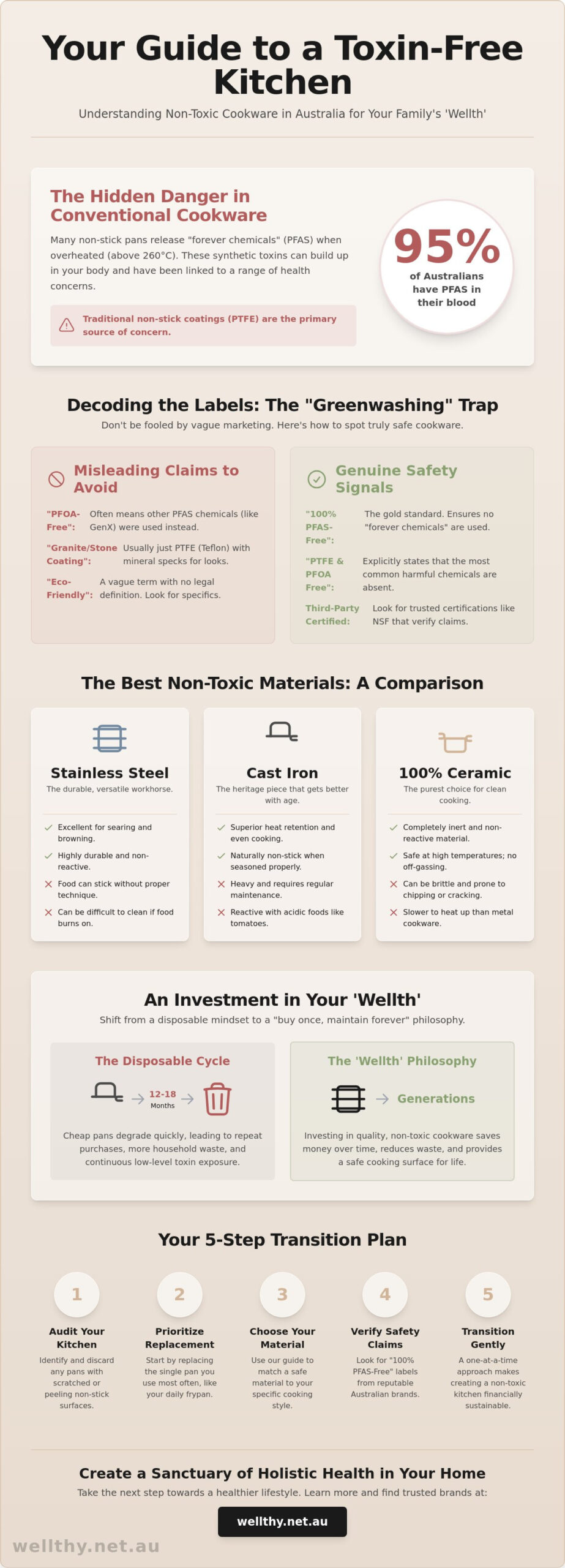
Recent data from Australian environmental monitoring suggests that “forever chemicals” like PFAS are now present in a staggering 95 percent of the population’s blood samples. This reality has sparked a growing awareness among Australian households. We are beginning to see that our wellness isn’t just about what we eat, but how we prepare it. By aligning your kitchen tools with your health values, you create a sanctuary where nourishment is never compromised by chemical interference.
The Problem with Conventional Non-Stick
Traditional non-stick coatings rely on Polytetrafluoroethylene (PTFE), a synthetic polymer discovered in 1938 that became a household staple by the 1960s. These coatings are convenient but become unstable when temperatures exceed 260 degrees Celsius. In Australia, the manufacturing and disposal of these synthetic coatings have left a lasting impact on local soil and waterways. Off-gassing is the chemical release of toxic vapors from heated synthetic coatings that can diminish the purity of your home’s air. By exploring different cookware materials, you can better understand which surfaces provide the safest heat conduction without these environmental or respiratory risks.
The “Wellth” Perspective: Investing in Longevity
Many households fall into a cycle of buying cheap, disposable pans that lose their coating within 12 to 18 months. This habit creates a massive amount of household waste and costs more over time. Investing in high-quality, non-toxic pieces shifts your focus to a “buy once, maintain forever” philosophy. A solid cast iron skillet or a premium stainless steel pot can last for generations with proper care. This approach preserves your financial wellth while supporting a sustainable future. It’s a simple, honest way to reduce waste and ensure your kitchen remains a reliable anchor for your family’s long-term health.
Decoding the Label: PFAS, PFOA, and the “Forever Chemical” Reality
Chemical acronyms often act as a barrier to understanding what is actually happening on your stovetop. PFAS stands for per- and polyfluoroalkyl substances, a family of over 12,000 synthetic chemicals used to create heat-resistant and non-stick surfaces. While they offer convenience, they come with a hidden cost to your long-term wellth. Finding genuine non-toxic cookware australia involves looking past the “PFOA-free” stickers and understanding the full manufacturing story.
What are PFAS and Why Should You Care?
PFAS are known as “forever chemicals” because they don’t break down in the environment or the human body. They are biologically persistent. Once these substances enter your bloodstream through contaminated food or water, they remain there for years. The Australian Government Department of Health and Aged Care noted in 2023 that while research is ongoing, high levels of PFAS exposure are linked to increased cholesterol, changes in liver enzymes, and decreased vaccine response. It’s vital to distinguish between the final coating and the chemicals used during production. Even if a pan is “PFOA-free,” manufacturers often use GenX or other PFAS alternatives that present similar health risks but remain less regulated.
Spotting “Greenwashing” in the Kitchen Aisle
Walking through major Australian retailers can feel overwhelming when every box claims to be “natural” or “eco-friendly.” These terms are often marketing fluff without legal definitions. “Stone-derived” or “granite” coatings are frequently just standard PTFE (Teflon) with mineral flecks added for aesthetic appeal. To avoid the greenwashing trap, you must look for specific data. Genuine safety is found in third-party certifications like NSF (National Sanitation Foundation) or independent lab reports that test for heavy metal leaching and chemical off-gassing. A high price tag is frequently a reflection of a brand’s marketing spend rather than a guarantee of a cleaner manufacturing process.
- Check for GenX: Ensure the brand explicitly avoids all PFAS, not just PFOA.
- Regulatory Gaps: Australia’s AICIS framework is evolving, but it currently lacks the strict “precautionary principle” found in the European Union’s REACH standards.
- Independent Testing: Look for brands that publish their own lab results from facilities like SGS or Intertek.
Investing in your kitchen tools is a powerful way to protect your family’s vitality. When you choose materials that respect your body’s natural balance, you’re making a deposit into your future health. You can start by making small, informed shifts to prioritise your physical well-being through safer daily habits. True quality isn’t just about how a pan performs; it’s about the peace of mind it provides while you nourish those you love.
The Best Non-Toxic Materials: Comparing Ceramic, Stainless Steel, and Cast Iron
Choosing the right tools is a fundamental investment in your long-term vitality. When you evaluate non-toxic cookware australia, you’ll find that the “big three” materials ceramic, stainless steel, and cast iron offer distinct paths to a safer kitchen. Each material interacts with heat and food differently; understanding these nuances helps you build a kitchen that supports your health goals without the stress of chemical leaching.
The reality of leaching is often misunderstood. While cheap, damaged coatings can release PFAS into your meals, high-quality materials like 18/10 stainless steel or seasoned iron are remarkably stable. Your goal is to match the material’s strengths to your cooking style. A high-heat sear requires different properties than a delicate omelet, and your kitchen should reflect that versatility.
Ceramic: The Modern Non-Stick Alternative
Ceramic pans utilize sol-gel technology, a process that converts silica sand into a glass-like coating. It’s naturally PFAS-free and provides a slick surface without synthetic chemicals. You’ll enjoy the aesthetic appeal and the fact that no seasoning is required. However, ceramic is sensitive to thermal shock. Research from 2022 suggests that the non-stick lifespan of ceramic is shorter than metal alternatives, often lasting 1 to 3 years depending on care. It’s perfect for low-to-medium heat tasks but requires gentle handling to avoid surface cracks.
Stainless Steel: The Professional Standard
For a true heirloom investment, 18/10 or 304-grade stainless steel is the benchmark. These grades ensure the metal is non-reactive, meaning it won’t leach metallic tastes into acidic sauces. In Australian kitchens, you must look for “multi-clad” or “tri-ply” construction. Because steel is a poor heat conductor on its own, these pans sandwich an aluminum or copper core between steel layers. This design provides the even heating necessary for professional results. It’s durable, dishwasher-safe, and literally lasts a lifetime.
Cast Iron and Carbon Steel: The Original Non-Toxic
Cast iron is the ultimate “Wise Guide” choice for the sustainable cook. Instead of synthetic coatings, these pans use natural seasoning, which is simply oil baked into the metal. A study published in the Journal of the American Dietetic Association confirmed that cooking in iron can increase the iron content of food by up to 16 percent, providing a beneficial mineral boost. Don’t let the weight or maintenance objections hold you back. While they require drying and occasional oiling, their heat retention is unmatched for searing and baking. They are the most resilient non-toxic cookware australia has to offer.
For those who enjoy using their cast iron on the grill, sourcing natural hardwood from Charcoal Kings ensures that your outdoor cooking remains entirely free from synthetic additives or chemicals.
You don’t need to commit to a single material for every pot in your cupboard. We recommend the “Hybrid Kitchen” approach. This means using a ceramic pan for your morning eggs, a stainless steel pot for boiling pasta, and a cast iron skillet for your weekend roast. By diversifying your tools, you optimize your cooking performance while ensuring your home remains a sanctuary of health and safety.
A Buyer’s Guide to Choosing Safe Pots and Pans in Australia
Investing in your kitchen tools is a foundational step in your wellness journey. It’s about more than just aesthetics; it’s a commitment to ensuring every meal supports your long-term vitality. When you choose non-toxic cookware australia, you’re prioritizing materials that won’t leach chemicals into your food, even when the heat is turned up. This transition is a powerful way to protect your family’s “wellth” by creating a safer, cleaner cooking environment.
Top Non-Toxic Brands Available in Australia
You don’t need to look far to find high-quality, safe options. GreenPan is a global leader in ceramic non-stick technology and is widely available at national retailers like Myer, David Jones, and Kitchen Warehouse. Their Thermolon coating is derived from sand and contains no PFAS or lead. For those seeking a local hero, Solidteknics is a standout. Founded in 2014 and manufactured in Australia, their wrought iron pans are designed to last for generations. They arrive unseasoned or “quenched,” providing a natural non-stick surface without synthetic coatings. For premium stainless steel, brands like Essteele or Scanpan’s high-end clad ranges offer durability and safety, often found in specialty wellness boutiques and major department stores across the country.
- Chemical Transparency: Ensure the product explicitly states it’s free from PFOA, PFAS, lead, and cadmium.
- Induction Readiness: With 2023 data showing a significant shift toward electric cooking in new Australian builds, ensure your pan has a magnetic base.
- Handle Construction: Choose riveted stainless steel handles. They’re more durable than plastic or wooden versions and are safe for oven use.
- Lid Material: Metal lids are indestructible and provide a better seal, while tempered glass allows you to monitor food without releasing steam.
- Cladding: Look for “3-ply” or “5-ply” stainless steel. This ensures a core of aluminium or copper is sandwiched between steel, preventing hotspots.
The “Leidenfrost” Hack: Mastering Stainless Steel
Many people avoid stainless steel because they fear food will stick. You can solve this by mastering the Leidenfrost effect. Heat your dry pan over medium heat for about two minutes. Drop a small amount of water onto the surface. If the water sizzles and evaporates, the pan isn’t ready. If the water beads into a single “mercury ball” that dances across the surface, you’ve reached the perfect temperature. Add your oil now, and your steel pan will behave like a non-stick surface.
To maintain your pans without toxic chemicals, avoid aerosol oil sprays. These contain soy lecithin which builds up a sticky residue that’s nearly impossible to remove. Instead, use stable fats like ghee or avocado oil. If you have stubborn burnt-on bits, a simple paste of bicarb soda and water will lift most stains without the need for harsh, abrasive cleaners. It’s a practical, honest approach to kitchen maintenance that keeps your home environment pure.
Taking control of your cooking environment is a vital step toward a healthier lifestyle. You can invest in your kitchen wellth today by selecting tools that align with your long-term health goals.
Building Your Healthy Kitchen: How to Transition to Non-Toxic Cooking
Creating a safer home environment is a gradual process of alignment rather than an overnight overhaul. You don’t need to clear out every cupboard by tomorrow morning to make a meaningful impact on your health. Transitioning to non-toxic cookware australia residents can trust is about making intentional choices that fit your budget and lifestyle. Think of this as a long-term investment in your personal wellth, where every small change contributes to a more vibrant, chemical-free kitchen.
The “One-at-a-Time” approach is often the most sustainable path forward. High-quality ceramic or multi-clad stainless steel sets can range from A$400 to over A$1,000, which is a significant commitment. Instead of feeling overwhelmed, replace your most-used item first. For many, this is the everyday frying pan or the morning egg skillet. By upgrading your gear piece by piece, you manage the financial investment while steadily reducing your daily exposure to unwanted substances.
Prioritising Your Replacements
Start by auditing your current collection. Your immediate priority should be any non-stick pans with visible scratches, flaking, or discolouration. When the coating is compromised, the risk of chemicals leaching into your nourishment increases significantly. You can safely keep your glass baking dishes, high-quality wooden utensils, and well-seasoned cast iron, as these are naturally inert and durable.
Disposing of old gear responsibly is a key part of this holistic journey. In Australia, you shouldn’t place old metal cookware in your standard kerbside recycling bin. Instead, look for scrap metal recycling programs. Organizations like Planet Ark provide directories for local drop-off points, and many councils across New South Wales and Victoria offer dedicated “Community Recycling Centres” that accept metal goods. This ensures your old pans are diverted from landfill and processed correctly.
Once you’ve secured your new investment, protection is vital. Prevent chipping or surface damage by using felt pan protectors or simple cork mats between stacked items. This simple habit preserves the integrity of your non-toxic cookware australia purchases for years to come.
Partnering for a Healthier Lifestyle
At Wellthy, we believe that your environment should support your vitality. We actively seek out and support brands that share these rigorous standards for safety and sustainability. Our goal is to simplify your path to wellness by providing evidence-based insights and transparent recommendations. You can explore our curated reviews and learn more about how we vet the industry through our guide on health and fitness brand partnerships, noting that The Ethical Agency often assists these sustainable organizations in sharing their mission with the world.
Your kitchen is the heart of your home’s wellth. It’s the space where you nourish yourself and those you love. By choosing tools that respect your biology, you’re choosing a lifestyle of harmony and long-term health. Subscribe to our newsletter for more guides on investing in your personal wellth and staying informed on the latest in holistic living.
Your Path to a Healthier Australian Kitchen
Transitioning to a chemical-free home doesn’t require an immediate or expensive overhaul. It’s a series of intentional, sustainable choices that prioritize your long-term vitality. By selecting materials like seasoned cast iron or 18/10 stainless steel, you’re actively reducing daily exposure to PFAS and PFOA. Data from the Australian Department of Health shows that most residents carry traces of these “forever chemicals,” making the shift to non-toxic cookware australia a significant step for your household’s well-being. Our focus remains on providing expert-vetted material science and holistic, non-judgmental guidance tailored to local availability. You’re not just buying pans; you’re building a foundation of health that pays dividends for years. Every meal becomes an act of self-care and a commitment to your family’s safety. It’s a rewarding process that values progress over perfection. You’ve got the knowledge to make these changes at your own pace. Your kitchen is the heart of your home, and it deserves to be a sanctuary of health.
Invest in your kitchen wellth-explore our latest wellness brand features.
You’re making a wonderful investment in your future self, and we’re here to support every step of that transition.
Frequently Asked Questions
Is ceramic cookware really non-toxic?
Pure ceramic and high-quality ceramic-coated pans are non-toxic choices because they don’t contain PFAS, PFOA, lead, or cadmium. These pans use a mineral-based “sol-gel” coating that remains stable at temperatures up to 450°C. When you choose ceramic, you’re making a mindful investment in your family’s vitality. Just ensure the brand explicitly states they’re third-party tested to meet REACH or Australian safety standards to avoid heavy metal contamination.
What is the safest cookware for high-heat searing?
Seasoned cast iron and carbon steel are the safest options for high-heat searing at temperatures above 260°C. Unlike traditional non-stick surfaces that release toxic fumes when overheated, these natural materials thrive under intense heat. They develop a protective patina over time, which improves with every use. This durable choice supports a sustainable kitchen lifestyle while providing the professional results you need for a perfect crust on your proteins.
Does stainless steel leach nickel into food?
High-quality 18/10 stainless steel can leach small amounts of nickel, especially when you cook acidic foods like tomatoes for over 120 minutes. A 2013 study published in the Journal of Agricultural and Food Chemistry confirmed that leaching is most common during the first few cooking cycles. If you have a known nickel sensitivity, investing in 18/0 nickel-free stainless steel is a wise way to ensure your nourishment remains pure and irritation-free.
How can I tell if my current non-stick pans are toxic?
Check the manufacturing date and the physical condition of the surface; pans made before the 2013 global PFOA phase-out likely contain harmful chemicals. If your pan is flaking, deeply scratched, or emits a chemical odour when heated, it’s time for an upgrade. Finding the best non-toxic cookware australia has to offer means looking for modern labels that guarantee the product is 100% free from PFAS and heavy metals.
Are Australian-made cookware brands safer than imported ones?
Australian-made brands like Solidteknics often provide a higher level of safety because they use locally sourced, clean materials and adhere to strict local manufacturing oversight. While all cookware sold here must meet Australian Consumer Law, local production offers better transparency regarding the raw materials used. Choosing home-grown brands is a practical way to support local industry while ensuring your kitchen tools are free from the unregulated toxins found in some international supply chains.
What is the best non-toxic cookware for induction cooktops?
Enameled cast iron and multi-clad stainless steel are the premier non-toxic choices for induction cooking because of their natural magnetic properties. These materials allow for precise temperature control without the need for synthetic chemical coatings. When you select high-grade non-toxic cookware australia, ensure the base is completely flat. This ensures a stable connection with your induction surface, promoting even heat and preserving the nutritional integrity of your ingredients.
Can I use metal utensils on non-toxic ceramic pans?
No, you shouldn’t use metal utensils on ceramic surfaces because they can create micro-scratches that compromise the non-stick finish. Use silicone or FSC-certified wooden tools to protect your investment and extend the life of the pan. Even the most durable ceramic coatings are delicate. Caring for your cookware with gentle tools reflects a respectful approach to your kitchen environment, keeping your cooking surface smooth and safe for years.
Is cast iron safe for people with iron overload (hemochromatosis)?
People managing hemochromatosis should avoid unsealed cast iron because it can leach between 2 to 5 milligrams of iron into acidic meals. This extra iron intake can complicate the management of your health goals. Enameled cast iron is a much safer alternative for your home. The glass-like enamel coating provides a permanent barrier that prevents iron transfer while still offering the superior heat retention and performance of traditional cast iron.